Understanding PMOS
Understanding PMOS
Hormonal Variance, Metabolism & Whole-Body Support
(formerly known as PCOS)
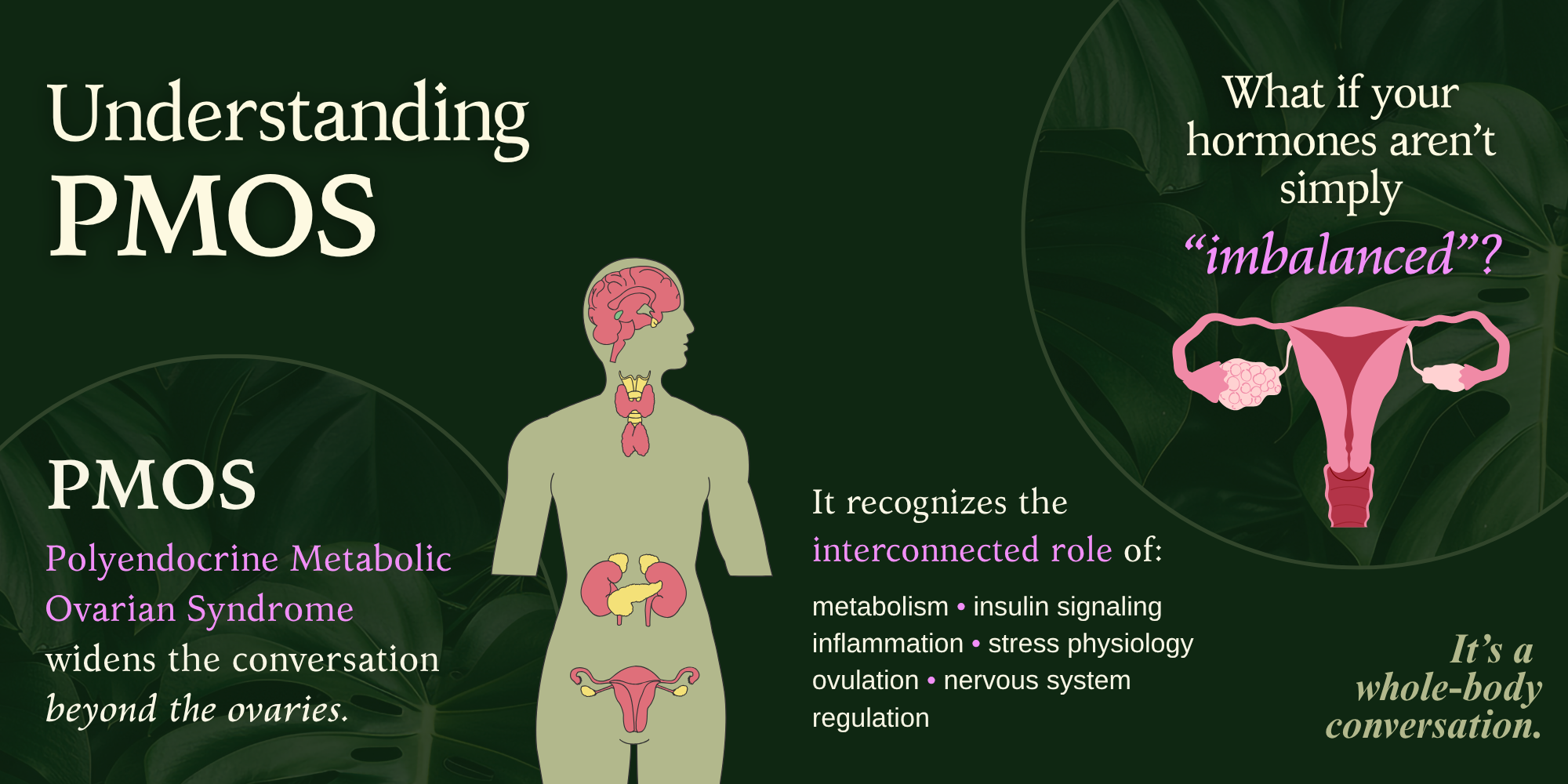
For many people, the shift from “PCOS” to “PMOS” feels significant not simply because the name changed, but because the conversation finally began to widen.
A Shift in Perspective
For years, people were taught to view their bodies through a lens of dysfunction, control, and correction. But hormones are not static. Bodies are not machines. And many symptoms are not signs of failure, but signals of adaptation, sensitivity, and survival within modern conditions the human body was never designed to navigate so chronically. PMOS (Polyendocrine Metabolic Ovarian Syndrome) acknowledges that this experience is not solely ovarian or reproductive. It involves the endocrine system as a whole: metabolism, insulin signaling, inflammation, stress physiology, ovulation patterns, and nervous system regulation.
Hormones & The Nervous System
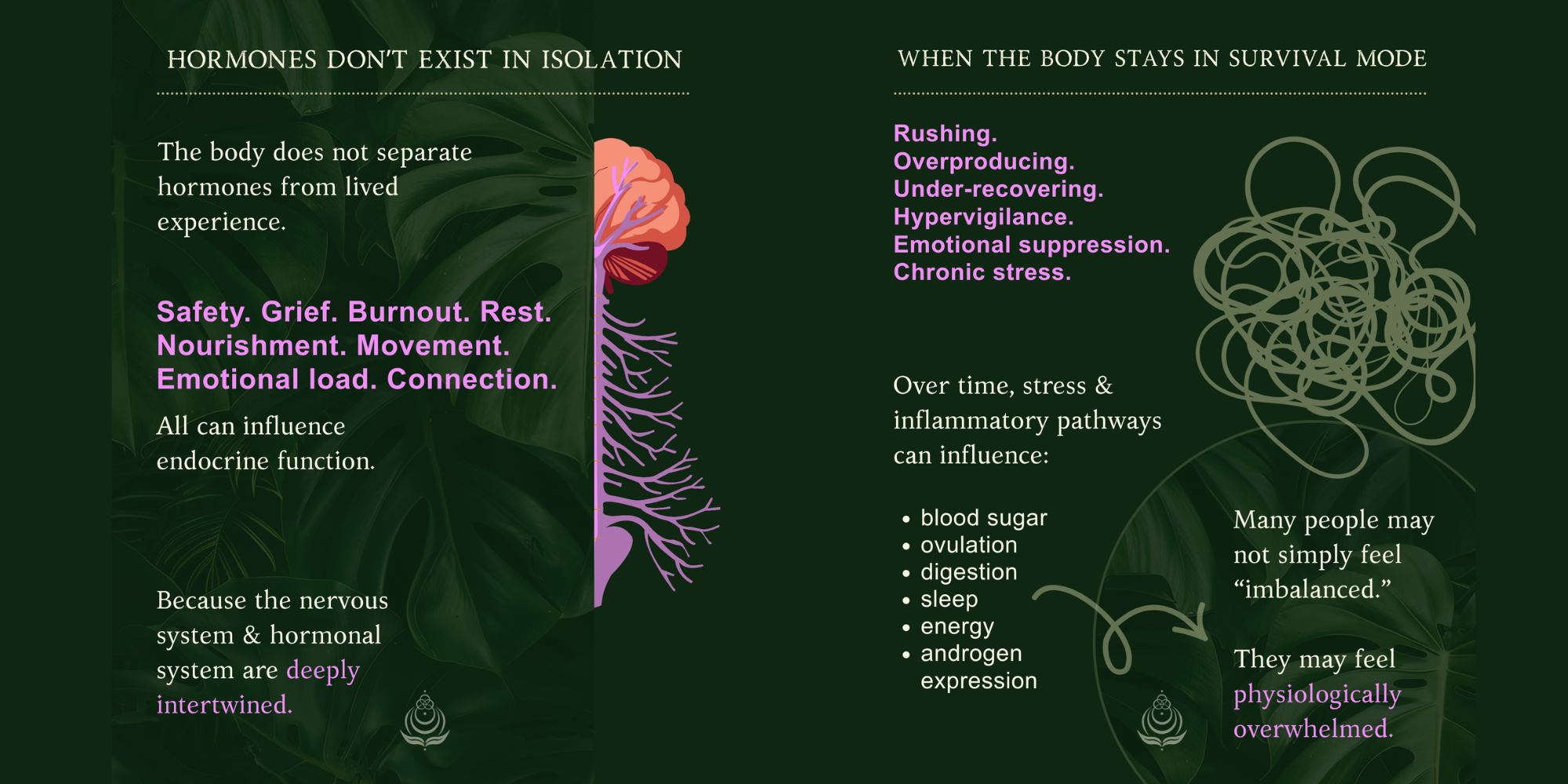
The body does not separate hormones from lived experience. Safety, grief, overstimulation, burnout, nourishment, emotional load, movement, rest, and connection all influence endocrine function. The nervous system and hormonal system are deeply intertwined. When the body remains in chronic survival states for long periods of time as: rushing, overproducing, under-recovering, hypervigilance, emotional suppression, chronic stress exposure…cortisol and inflammatory pathways can begin influencing blood sugar regulation, ovulation patterns, digestion, sleep, energy, and androgen expression. Many people with PMOS are not simply “imbalanced.” Many are physiologically overwhelmed.
What Nervous System Support Actually Looks Like
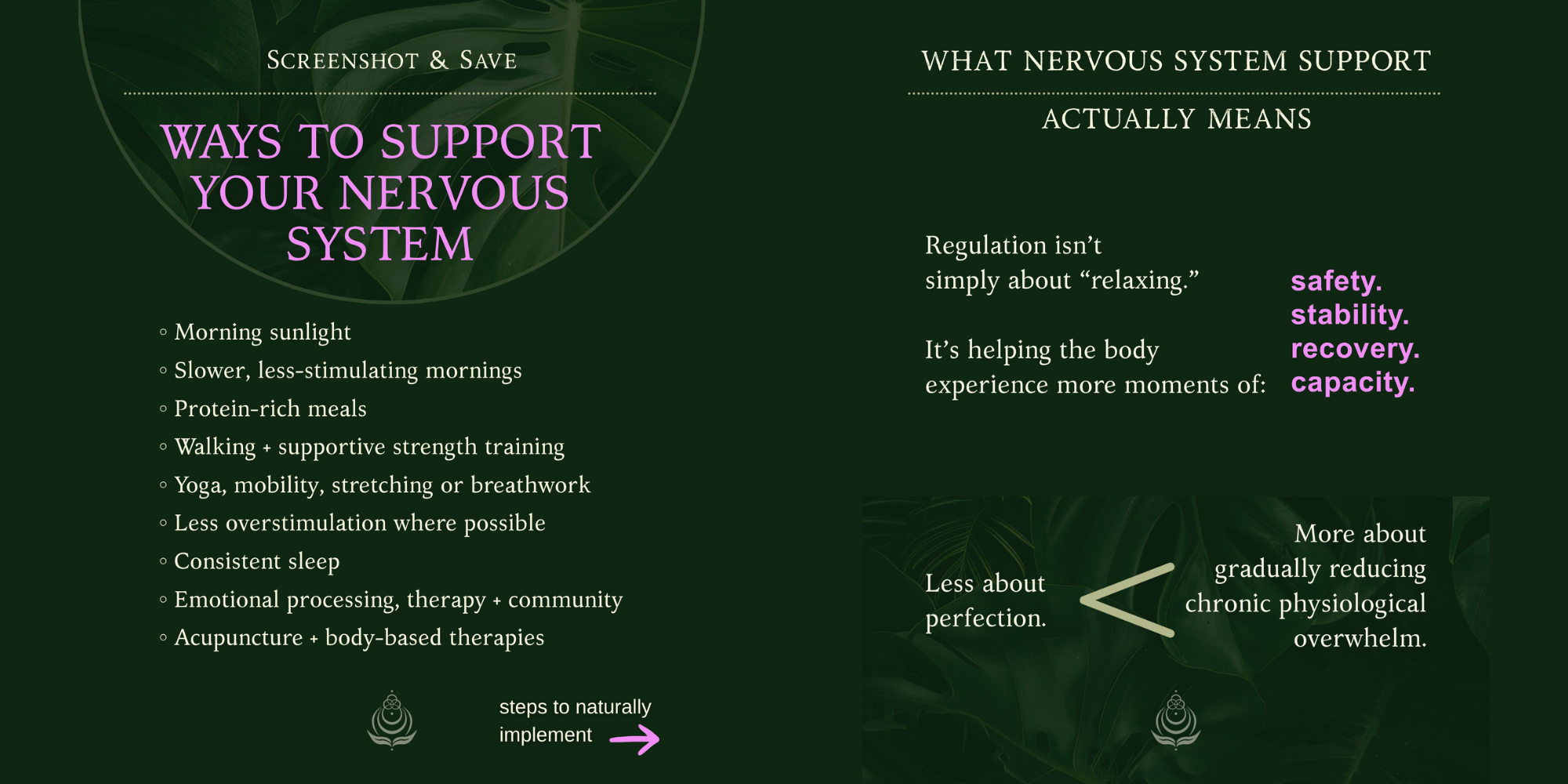
Nervous system regulation is often misunderstood as simply “relaxing.” In reality, regulation is about helping the body experience more moments of safety, stability, recovery, and capacity. For many people, this looks less like perfection and more like slowly reducing chronic physiological overwhelm over time.
Supportive Practices May Include:
morning sunlight exposure to support circadian rhythm and cortisol regulation
slower mornings before immediately consuming stress, screens, or stimulation
protein-rich meals that help the body feel metabolically safe and stable
walking and strength training in ways that feel supportive rather than punishing
restorative movement such as yoga, stretching, mobility work, or breathwork
reducing overstimulation where possible
prioritizing sleep consistency
emotional processing, therapy, or community support
acupuncture and body-based therapies that help shift the body out of chronic fight-or-flight states
The body often regulates more effectively when it feels safer.
The Most Impactful Things You Can Do at Home
Research consistently shows that hormonal and metabolic health improve most when the body experiences greater stability, nourishment, movement, sleep, and nervous system support. Not through punishment. Not through extremes. And usually not through trying to force the body into regulation.
Support Blood Sugar Stability
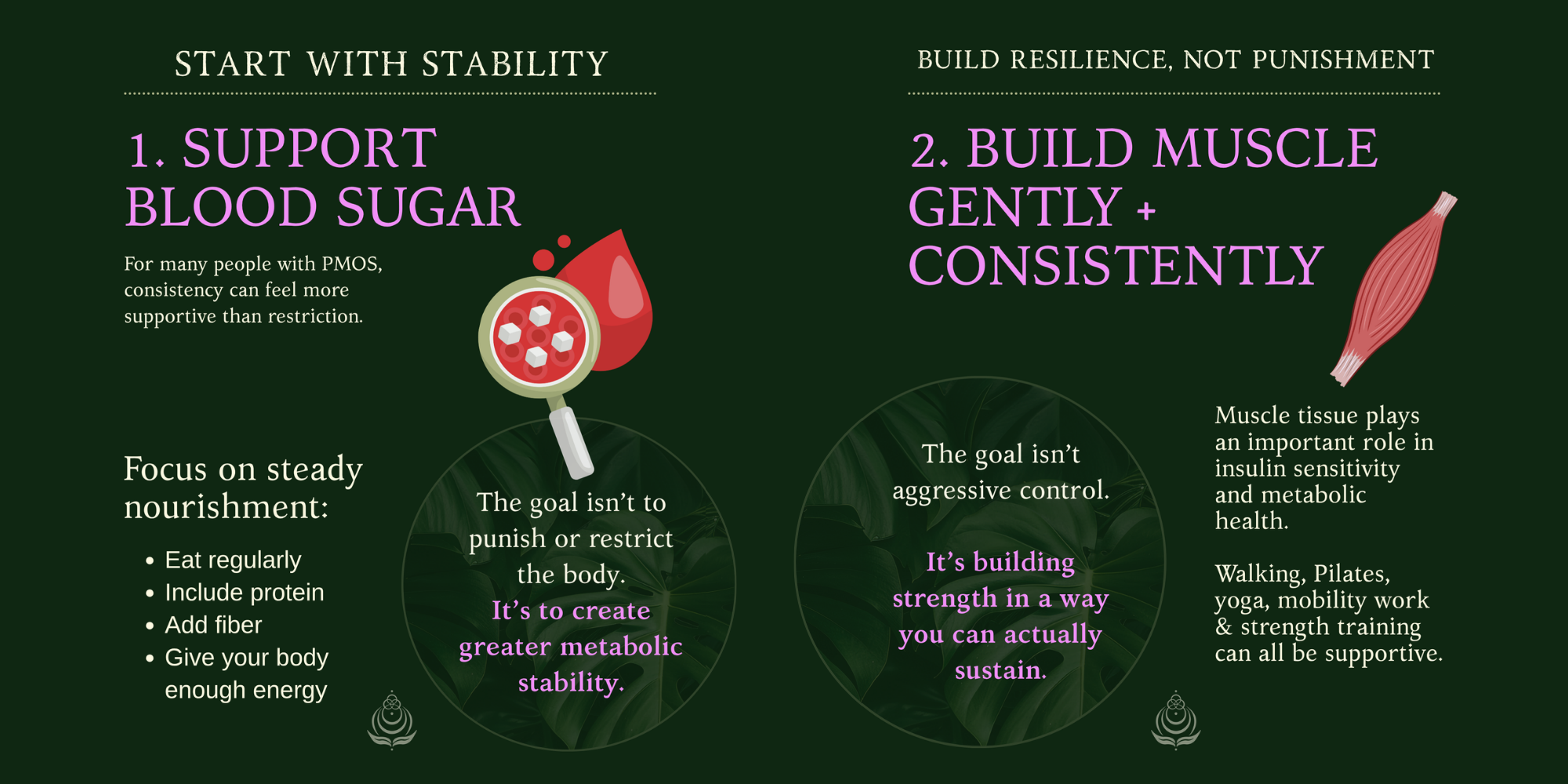
Many people with PMOS notice their body feels safest and most stable when blood sugar is supported consistently, not through restriction, but through regular nourishment, protein, fiber, and enough energy to actually sustain them.
Build Muscle Gently & Consistently
Muscle tissue plays a major role in insulin sensitivity and metabolic health. Walking, Pilates, yoga, mobility work, and strength training can all be supportive when approached from a place of sustainability rather than punishment. The goal is not to aggressively control the body. The goal is to create resilience and long-term metabolic stability.
Rather than asking:
“How do I fix my body?”
Many people are now asking:
“How do I better understand and support my body?”
Your body may not need harsher discipline.
It may need: more nourishment, more muscle, more stability, more rest, more softness, more recovery…more listening.
The future of hormonal care is likely not about becoming less human.
It is about learning how to support the body more intelligently, compassionately, and sustainably within the reality of modern life.
Source:
Teede H, Khomami M, Morman R et al. Polyendocrine metabolic ovarian syndrome, the new name for polycystic ovary syndrome: a multistep global consensus process The Lancet, 2026; 407, 2329-2339 https://www.thelancet.com/journals/lancet/article/PIIS0140-6736(26)00717-8/fulltext
